
The Future of Work: Exploring Careers in AI Ethics, Sustainable Logistics, and Climate Engineering
If you’ve ever been asked, "What do you want to be when you grow up?" and felt a sense of dread, here is some good news: a huge percentage of the jobs that will exist when you graduate from university haven’t even been invented yet.
According to a famous report by Dell Technologies and the Institute for the Future, roughly 85% of the jobs that will exist in 2030 are currently non-existent. We are living through the "Fourth Industrial Revolution," where the lines between the physical, digital, and biological worlds are blurring. This isn't just about robots replacing humans; it’s about humans stepping into entirely new roles that solve the complex problems of the 21st century.
Let’s pull back the curtain on the future and explore three "hot" career paths that are currently being born: AI Ethics, Sustainable Logistics, and Climate Engineering.
Share: 



1. The Guardian of the Algorithm: AI Ethics Officers
We talk about Artificial Intelligence (AI) every day. From ChatGPT helping with homework to algorithms deciding which TikTok video you see next, AI is everywhere. But as AI becomes more powerful, a massive question arises: How do we make sure it stays "good"?
This is where the AI Ethics Officer comes in.
What is it?
AI isn’t inherently "fair." Because it learns from human data, it often picks up human biases. If an AI used for hiring employees only looks at data from the last 50 years, it might accidentally learn that men are "better" for leadership roles simply because they held those roles more often in the past. An AI Ethics Officer is the person who audits these systems. They are part philosopher, part data scientist, and part lawyer.
Why it’s the future:
As governments start passing laws about how AI can be used, companies will be legally required to prove their tech isn't harmful. This job is perfect for students who love both Humanities and Tech. You don’t just need to know how to code; you need to understand sociology, history, and morality to ensure that the "brain" of the future doesn't repeat the mistakes of the past.
2. The Sky Traffic Controller: Smart Logistics & Drone Managers
Climate change is the defining challenge of your generation. While we are working hard to reduce carbon emissions, many scientists believe we will eventually need to take a more active role in "fixing" the Earth’s atmosphere. This is the radical world of Climate Engineering.
What is it?
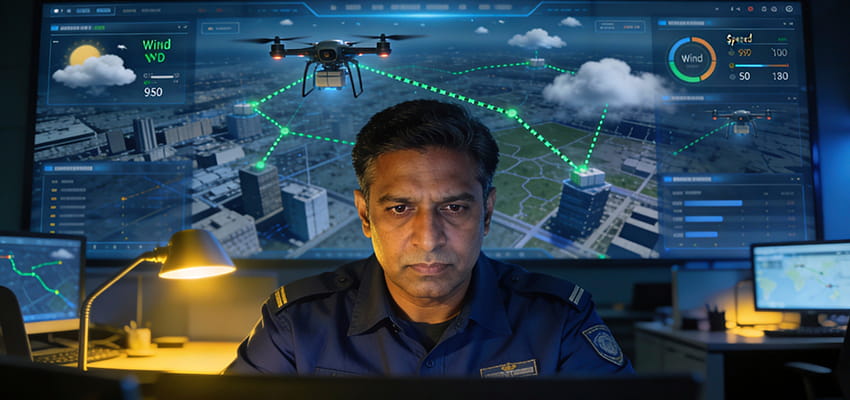
A Smart Logistics Manager isn't just someone who watches a screen. They are the architects of "last-mile" delivery. They manage fleets of autonomous drones, ensuring they don't collide, respect privacy laws, and operate with maximum energy efficiency. Imagine a mix of an air traffic controller, a software engineer, and a city planner.
Why it’s the future:
E-commerce is growing at an exponential rate, but our current road systems can't handle the traffic. The shift to autonomous, electric delivery systems is a practical necessity. We will need people to design these "digital highways," manage the charging infrastructure, and step in when the AI routing systems face unexpected weather or urban obstacles. If you enjoy strategy games, logistics, or robotics, this is a career where you can see your impact in real-time.
3. The Earth’s Mechanic: Climate Engineers (Geoengineers)
Climate change is the defining challenge of your generation. While we are working hard to reduce carbon emissions, many scientists believe we will eventually need to take a more active role in "fixing" the Earth’s atmosphere. This is the radical world of Climate Engineering.
This is where the AI Ethics Officer comes in.
What is it?
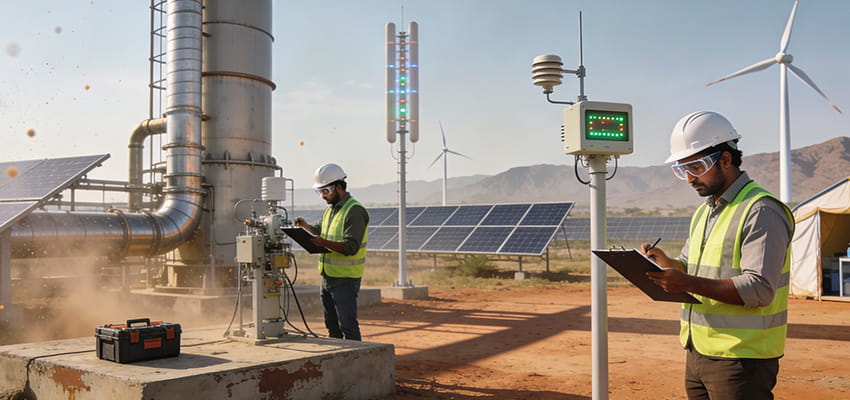
Climate Engineering (or Geoengineering) involves large-scale interventions in the Earth’s natural systems to counteract global warming. This could include:
- Carbon Sequestration:
Designing massive machines that "suck" CO2 out of the sky and turn it into rock.
- Solar Radiation Management:
Spraying reflective particles into the upper atmosphere to bounce sunlight back into space and cool the planet.
- Ocean Fertilization:
Encouraging the growth of plankton to absorb more carbon from the water.
Why it’s the future:
We are moving past the point where "being green" is enough. We are entering an era of "Planetary Management." This career path is for the ultimate problem-solvers. It requires deep knowledge of chemistry, meteorology, and international law (because if one country cools the Earth, it might change the rain patterns in another). It is a high-stakes, high-reward career that could literally save the world.
How to Prepare for a Job That Doesn't Exist
You might be wondering: How do I study for a job that has no degree yet? The secret isn't in memorizing facts; it’s in developing Transferable Skills. Here are three things you should focus on in Grade 9 and 10 to be ready for the unknown:
1.Carbon Sequestration:Don't just be a "Science person" or a "History person." The future belongs to the "Polymaths"—people who can connect the dots between different subjects. AI Ethics requires both coding and philosophy. Climate Engineering requires both chemistry and politics.
2.Adaptability (The AQ): You’ve heard of IQ (Intelligence) and EQ (Emotional Intelligence). Now, employers are looking for AQ (Adaptability Quotient). This is your ability to unlearn old ways of doing things and quickly learn new ones.
3.Critical Ethics: Technology moves faster than the law. In the future, you will often be in situations where you can do something (like edit a gene or track a person's location), but you have to decide if you should. Developing a strong moral compass is your best career move.
Final Thoughts
The idea of "jobs that don't exist" can be scary, but it’s actually an incredible opportunity. It means you aren't limited to the boxes on a career chart. You have the chance to be the "First" of something.
In Grade 9 and 10, you aren't just choosing subjects; you are building a toolkit. Whether you end up managing a drone fleet, auditing a sentient robot, or re-freezing the Arctic, your biggest asset won't be what you know—it will be how you think.
The future is wide open. What will you build?
Follow our blog for more tips on navigating high school and beyond!
