
Beyond the Stethoscope: How Tech is Transforming Healthcare and Why You Should Care (Even if You Hate Biology)
When you hear "healthcare career," what springs to mind? Doctors in white coats, nurses bustling through hospital corridors, maybe even a paramedic speeding to an emergency. And yes, those roles are vital and incredible. But for many of you in Grade 9 or 10, the idea of years of medical school, or the sight of blood, might make a healthcare career feel… well, not for you.
Here’s the secret: the world of healthcare is rapidly evolving, and thanks to technology, it’s becoming a playground for innovators, problem-solvers, and creatives – even if your idea of biology class is "I hope I don't have to dissect anything."
Welcome to "Helping & Healthcare: The Tech Twist," where we explore the mind-blowing ways technology is revolutionizing how we heal, prevent illness, and improve lives. This isn't just about robots performing surgery (though that's pretty cool!). It's about data, design, engineering, and even storytelling, all coming together to make a real difference.
Share: 


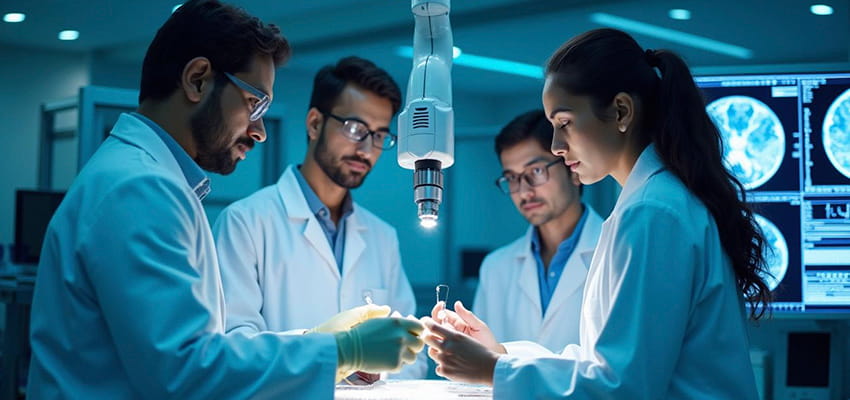
The Doctor-Engineer Hybrid: Medical Robotics & AI Diagnostics
Imagine a world where surgeons can perform delicate operations with such precision that human error is virtually eliminated. That's the reality with medical robotics. These aren't just fancy machines; they are sophisticated tools that extend human capability. Think about:
-
Surgical Robots:Like the da Vinci Surgical System, these robots allow surgeons to operate through tiny incisions, leading to less pain and faster recovery for patients. But who builds them? Mechanical engineers design the intricate arms, software engineers write the code, and biomedical engineers ensure they are safe and effective for the human body.
-
AI for Diagnosis:What if a computer could analyse thousands of X-rays or MRI scans in seconds, spotting tiny anomalies that a human eye might miss? That's the power of Artificial Intelligence (AI) in diagnostics. AI algorithms are being trained to detect early signs of cancer, eye diseases, and even mental health conditions. If you love puzzles, pattern recognition, or coding, this field is begging for your talent. You could be building the next generation of diagnostic tools that save countless lives.
The Digital Architects of Wellness: UX/UI Design in Health Tech
We all use apps and websites every day. Some are intuitive and a pleasure to use; others are frustrating. In healthcare, a well-designed app isn't just about convenience; it can be life-saving. This is where User Experience (UX) and User Interface (UI) design come in.
-
Health Apps & Wearables: Think about fitness trackers, mental wellness apps, or platforms that help manage chronic conditions like diabetes. These need to be easy for everyone to understand, from a tech-savvy teen to a grandparent.
-
Designing for Empathy:UX/UI designers in healthcare aren't just making things look pretty. They're solving complex problems like: How do we make sure a patient remembers to take their medication? How can we present complex medical information in a simple, reassuring way? How can an app connect someone struggling with anxiety to the right resources?
If you're artistic, empathetic, and love to solve problems by making things intuitive and beautiful, you could be designing the next generation of health tech that empowers people to take control of their well-being.

The Data Detectives: Bioinformatics & Health Data Science
Every time you visit a doctor, get a blood test, or even wear a smartwatch, you generate data. Alone, each piece of data might not mean much. But when you collect, organize, and analyse massive amounts of health data, incredible insights emerge. This is the realm of Bioinformatics and Health Data Science.
-
Mapping the Human Genome: Bioinformatics was crucial in mapping the human genome, unlocking secrets about our DNA. Now, bioinformaticians are using this data to develop personalized medicine – treatments tailored to an individual's unique genetic makeup.
-
Predicting Outbreaks: Data scientists can analyse public health data to predict disease outbreaks, helping communities prepare and respond effectively.
-
Improving Hospital Efficiency:Imagine using data to optimize hospital staffing, reduce wait times, or even predict which patients are at risk of complications.
If you enjoy math, statistics, computer science, and have a knack for finding patterns in vast amounts of information, a career in health data could place you at the forefront of medical discovery and public health strategy.
The Virtual Healers: Telemedicine & Digital Therapeutics
The pandemic rapidly accelerated the adoption of telemedicine, where doctors consult with patients virtually. But it’s much more than just video calls with your GP.
-
Remote Monitoring:Devices that wirelessly send vital signs (like heart rate, blood pressure, or glucose levels) to doctors, allowing for continuous monitoring from home.
-
Digital Therapeutics (DTX): These are clinically validated software programs that deliver evidence-based therapeutic interventions to patients. Think of apps that help manage chronic pain, treat ADHD, or even provide therapy for depression, prescribed by a doctor just like medication.
Behind these innovations are software developers, network engineers ensuring secure connections, and product managers who bridge the gap between medical needs and technological solutions. This field requires a blend of technical skill and an understanding of human behaviour and healthcare regulations.
The Builders of Bionics: Prosthetics, Exoskeletons & Medical Devices
For those who are hands-on and fascinated by how the human body works (and how to improve it!), consider the world of Biomedical Engineering and Prosthetics.
-
Advanced Prosthetics: No longer just basic hooks, modern prosthetics are incredibly sophisticated, some even connecting directly to the nervous system, allowing users to "feel" and control them with their thoughts.
-
Exoskeletons:Wearable robotic suits that help people with spinal cord injuries walk again, or assist workers in physically demanding jobs.
-
Implantable Devices: From pacemakers to smart insulin pumps, these tiny marvels keep people healthy and improve quality of life.
Designing and building these devices requires a deep understanding of engineering principles, materials science, and how these devices interact with the human body. It's a field where innovation directly translates into enhanced human capability and freedom.

Why This Matters to YOU
You don't need to dream of being a doctor to have a profoundly impactful and exciting career in healthcare. The "Tech Twist" means that your passion for:
-
Coding? You can develop life-saving apps and AI.
-
Design & Art? You can create intuitive health platforms and engaging digital therapeutics.
-
Problem-solving & Engineering? You can build robotic surgeons or advanced prosthetics.
-
Data & Analytics? You can uncover patterns that revolutionize public health.
-
Creativity & Storytelling?You can design educational health content that reaches millions.
What you can do now:
1.Explore: Look up "biomedical engineering projects," "health tech startups," or "AI in medicine."
2.Experiment: Try a beginner's coding course, learn graphic design software, or join a robotics club.
3.Talk to people: If you know anyone working in tech or healthcare, ask them about their job. You might be surprised by the crossovers!
The future of healthcare isn't just about medicine; it's about human ingenuity, empowered by technology, to create a healthier world for everyone. And there’s a place for your unique skills and interests in this thrilling revolution.
