
Serving the Nation: A Deep Dive into Civil Services Careers
The desire to contribute meaningfully to society, to be a part of positive change, and to hold a position of respect and responsibility often leads bright minds towards a career in the Civil Services. These roles are not just jobs; they are a commitment to public service, offering a unique blend of challenging work, diverse experiences, and the unparalleled satisfaction of working for the betterment of millions.
But what exactly does a career in civil services entail? How does one navigate the often-complex path to these coveted positions? And what are the crucial examinations that stand between aspiration and achievement? Let's break it down.
Share: 



What Exactly Are Civil Services?
Civil Services form the permanent executive arm of the government, responsible for implementing policies, delivering public services, and maintaining law and order. Unlike elected officials, civil servants remain in their positions regardless of changes in political leadership, providing continuity and expertise in governance.
The scope of civil services is vast and encompasses a myriad of roles across various ministries, departments, and public sector organizations. From administering justice and managing finances to shaping foreign policy and leading development projects, civil servants are the backbone of the nation's administration.
Some of the most well-known and sought-after civil service positions in India include:
-
Indian Administrative Service (IAS):The pinnacle of civil services, IAS officers are involved in policy formulation, implementation, and overall administration at district, state, and central levels. They serve as District Magistrates, Collectors, and Secretaries to various government departments.
-
Indian Police Service (IPS): IPS officers are responsible for maintaining law and order, preventing crime, and ensuring public safety. They hold positions like Superintendent of Police, Deputy Commissioner of Police, and Director General of Police.
-
Indian Foreign Service (IFS): IFS officers represent India on the global stage, managing diplomatic relations, promoting India's interests abroad, and working in embassies and consulates worldwide.
-
Indian Revenue Service (IRS): IRS officers are involved in the administration and collection of various taxes (income tax, customs, GST), playing a crucial role in the nation's financial health.
-
Indian Forest Service (IFoS): IFoS officers manage the nation's forests, wildlife, and environmental conservation efforts, working towards sustainable development.
-
And many more:Beyond these, there are numerous other Group 'A' and Group 'B' services covering specialized areas like audit and accounts, railways, postal services, information, trade, and defence estates.
The allure of these roles stems from their capacity to influence policy, initiate large-scale projects, and directly impact the lives of citizens. It's a career path that promises intellectual stimulation, continuous learning, and a profound sense of purpose.

The Path to Civil Services: Your Roadmap
Getting into the civil services, especially the highly competitive Group 'A' services, primarily involves clearing rigorous national-level examinations. In India, the Union Public Service Commission (UPSC) is the central recruiting agency responsible for conducting these exams.
The most prominent examination for entry into the premier civil services (IAS, IPS, IFS, IRS, etc.) is the Civil Services Examination (CSE), commonly known as the UPSC CSE. This examination is notoriously tough, demanding extensive preparation, perseverance, and strategic planning.
The Civil Services Examination (CSE): A Three-Stage Marathon
The UPSC CSE is not a sprint; it's a marathon structured into three distinct stages:
1.Preliminary Examination (Prelims):
The most prominent examination for entry into the premier civil services (IAS, IPS, IFS, IRS, etc.) is the Civil Services Examination (CSE), commonly known as the UPSC CSE. This examination is notoriously tough, demanding extensive preparation, perseverance, and strategic planning.
-
Nature:This is a screening test, designed to filter out a large number of applicants. The marks obtained in Prelims are not counted for the final merit list, but clearing it is mandatory to appear for the Mains.
-
Papers:It consists of two objective-type (multiple-choice questions) papers, each for 200 marks and 2 hours duration:
-
General Studies Paper I:Covers a broad range of subjects including Indian History, Indian and World Geography, Indian Polity and Governance, Economic and Social Development, General Science, Environmental Ecology, Biodiversity & Climate Change, and Current Events of National and International Importance.
-
General Studies Paper II (CSAT - Civil Services Aptitude Test):This is a qualifying paper, meaning you just need to score a minimum of 33% (66 marks out of 200). It tests comprehension, interpersonal skills, logical reasoning and analytical ability, decision-making and problem-solving, general mental ability, and basic numeracy.
-
Strategy: Success in Prelims hinges on comprehensive coverage of current affairs, strong conceptual understanding, and effective time management for both papers.
2.Main Examination (Mains):
The most prominent examination for entry into the premier civil services (IAS, IPS, IFS, IRS, etc.) is the Civil Services Examination (CSE), commonly known as the UPSC CSE. This examination is notoriously tough, demanding extensive preparation, perseverance, and strategic planning.
-
Nature:This is the most crucial stage, consisting of nine conventional (essay-type) papers. The marks obtained in these papers (excluding the two qualifying language papers) are counted for the final merit list.
-
Papers:
-
Qualifying Papers (300 marks each):
-
One Indian Language (chosen from the Eighth Schedule of the Constitution)
-
English
-
Candidates need to score minimum qualifying marks in these, usually 25%, for their other papers to be evaluated.
-
General Studies Paper I:Covers a broad range of subjects including Indian History, Indian and World Geography, Indian Polity and Governance, Economic and Social Development, General Science, Environmental Ecology, Biodiversity & Climate Change, and Current Events of National and International Importance.
-
General Studies Paper II (CSAT - Civil Services Aptitude Test):This is a qualifying paper, meaning you just need to score a minimum of 33% (66 marks out of 200). It tests comprehension, interpersonal skills, logical reasoning and analytical ability, decision-making and problem-solving, general mental ability, and basic numeracy.
-
Papers to be counted for Merit (250 marks each):
-
Essay (1 paper):Requires writing essays on multiple topics, testing your ability to articulate thoughts coherently and comprehensively.
-
General Studies I (GS I):Indian Heritage and Culture, History and Geography of the World and Society.
-
General Studies II (GS II):Governance, Constitution, Polity, Social Justice and International Relations.
-
General Studies III (GS III):Technology, Economic Development, Biodiversity, Environment, Security and Disaster Management.
-
General Studies IV (GS IV): Ethics, Integrity, and Aptitude.
-
Optional Subject (2 papers): Candidates choose one subject from a list of around 48 subjects (ranging from literature to sciences to humanities). Both papers test in-depth knowledge of this chosen subject.
-
Strategy: Mains requires strong analytical skills, structured answer writing, in-depth knowledge, and the ability to link various subjects. Essay writing and optional subject preparation are critical.
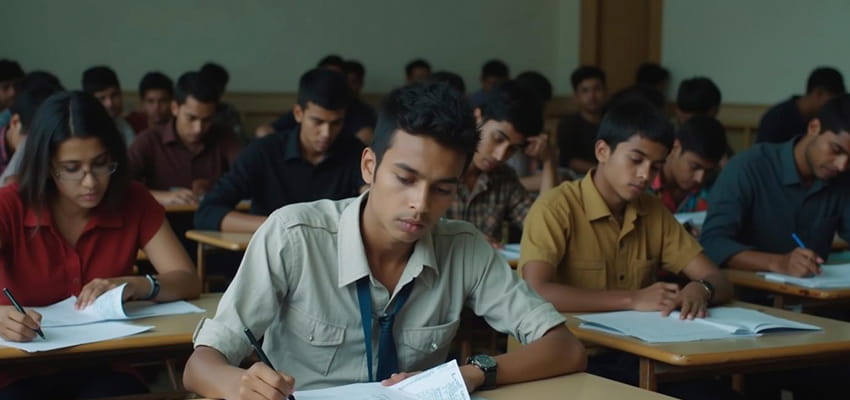
3.Personality Test (Interview):
-
Nature:This is the final stage, conducted for candidates who clear the Main Examination. It carries 275 marks.
-
Purpose:The interview aims to assess the candidate's personality, mental alertness, critical powers of assimilation, clear and logical exposition, balance of judgment, variety and depth of interest, ability for social cohesion and leadership, and intellectual and moral integrity. It's not a mere test of knowledge, which has already been assessed in Mains.
-
Strategy: Be authentic, articulate, well-informed about current affairs, and demonstrate a balanced perspective on various issues. Practice mock interviews to build confidence.
Other Civil Service Exams
While UPSC CSE is the most prominent, there are other pathways to civil services:
-
State Public Service Commissions (SPSCs):Each state in India has its own Public Service Commission (e.g., UPPSC, MPSC, TNPSC) that conducts examinations for recruitment to state-level civil services (State Administrative Service, State Police Service, etc.). The pattern is often similar to UPSC CSE but with a greater emphasis on state-specific knowledge.
-
Combined Defence Services (CDS) Examination:Conducted by UPSC for recruitment into the Indian Armed Forces (Army, Navy, Air Force) as commissioned officers. While not strictly "civil" services, it's a uniformed service with a strong public service ethos.
-
Staff Selection Commission (SSC) Examinations:SSC conducts various examinations for recruitment to Group 'B' and Group 'C' non-gazetted posts in various ministries and departments of the Government of India (e.g., SSC CGL for Inspector, Auditor, Assistant Section Officer, etc.).
Essential Traits for Aspiring Civil Servants
Beyond clearing exams, certain qualities are indispensable for a successful civil service career:
-
Integrity and Honesty: Upholding ethical standards is paramount.
-
Leadership and Decision-making Skills:Civil servants often lead teams and make critical decisions under pressure.
-
Empathy and Public Service Orientation:A genuine desire to serve the public is key.
-
Analytical and Problem-solving Ability:TEssential for policy analysis and addressing complex societal issues.
-
Adaptability and Resilience:The job demands readiness to work in diverse environments and handle challenging situations.
-
Communication Skills:Effective communication, both written and oral, is vital for interacting with the public, colleagues, and superiors.
-
Strategy: Mains requires strong analytical skills, structured answer writing, in-depth knowledge, and the ability to link various subjects. Essay writing and optional subject preparation are critical.
Embarking on Your Journey
The path to civil services is demanding, but immensely rewarding. It requires unwavering dedication, meticulous planning, and a deep-seated belief in the power of public service. Start early, stay updated with current affairs, read widely, and cultivate a holistic personality.
If you dream of shaping the nation's future, of being at the forefront of change, and of leaving a lasting legacy, then a career in the civil services might just be your true calling.
