Overview:
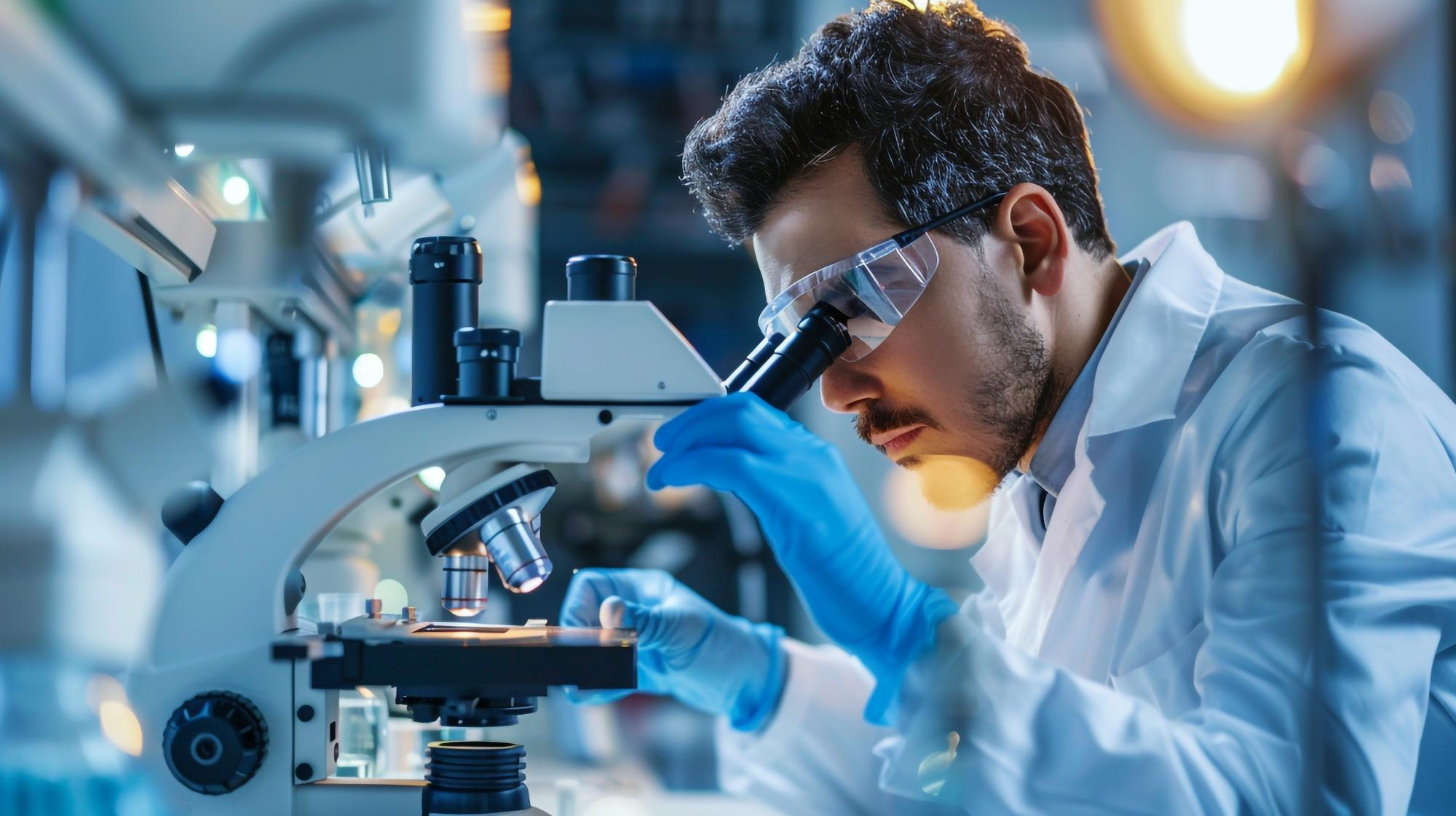
A Material Scientist researches, develops, and analyses the structure and properties of natural and man-made materials (metals, polymers, ceramics, composites) to create new, enhanced materials for industrial applications. By studying atomic and molecular structures, they improve performance in sectors like energy, electronics, aerospace, and biomedical engineering.
Career Path:
Chemists today aren't just at the bench; they are in boardrooms, legal offices, and software labs.
Sector Key Job Roles Typical Responsibilities
Pharmaceuticals Medicinal Chemist, Formulation Scientist, RA Associate Drug discovery, developing delivery systems (mRNA/Capsules), and ensuring regulatory compliance.
Manufacturing Process Development Chemist, Quality Control (QC) Scaling up lab reactions to industrial production and maintaining product purity.
Environmental Sustainability Consultant, Water Quality Chemist Monitoring pollutants, developing biodegradable plastics, and waste valorization.
Food and Beverage Flavour Chemist, Food Technologist Enhancing shelf-life, creating new flavours, and testing for contaminants like heavy metals.
Forensics Toxicologist, Forensic Science Technician Analysing crime scene evidence and identifying substances for legal proceedings.
Emerging Tech Battery Chemist, Computational Chemist Designing solid-state batteries for EVs and using AI to predict molecular behaviour.
Top 2026 Industry Trends
The job market is currently favouring "hybrid professionals" those who combine chemistry knowledge with modern tech skills.
- Green Chemistry: Massive growth in roles focused on "Net Zero" targets, circular economy, and PFAS (forever chemical) replacements.
- AI and Machine Learning: High demand for chemists who can code (Python) or use AI tools to accelerate drug discovery and material design.
- Energy Transition: Focus on hydrogen fuel cells, carbon capture technology, and next-gen solar cells (Perovskites).
- Biopharma: Shift toward cell and gene therapies, requiring chemists who understand both organic synthesis and biological systems.
Salary Outlook (2026 Benchmarks)
Salaries vary significantly based on education level and specialization.
- B.Sc. Chemistry: Typically starts between ₹2.5L – ₹5L per annum (India) or $45k – $60k (USA).
- M.Sc. / Ph.D. Specialists: Senior RandD roles or specialized fields like Materials Science or Toxicology can command ₹15L – ₹30L+ in India or $90k – $140k+ in global markets.
- Top High-Paying Locations: Bangalore, Hyderabad, and Delhi (India); New Jersey, California, and Massachusetts (USA); Germany and Switzerland (Europe).
Essential Skills for 2026
To stay competitive, aim to master these "power skills":
1. Analytical Techniques: Proficiency in HPLC, GC-MS, NMR, and ICP-OES.
2. Data Science: Basic data analysis (Excel/SQL) and R or Python for chemical modelling.
3. Regulatory Knowledge: Familiarity with FDA, REACH, or GHS (Global Harmonized System).
4. Soft Skills: Technical writing and the ability to explain complex data to non-scientific stakeholders.
Top Colleges:
Top Global Universities for Materials Science
These schools are widely recognised for excellence in materials science research, education, and industry connections:
1. Massachusetts Institute of Technology (MIT) – USA
2. Nanyang Technological University (NTU) – Singapore
3. Stanford University – USA
4. University of Cambridge – UK
5. Harvard University – USA
6. National University of Singapore (NUS) – Singapore
7. Tsinghua University – China
8. University of Oxford – UK
9. University of California, Berkeley (UCB) – USA
10. École Polytechnique Fédérale de Lausanne (EPFL) – Switzerland
11. ETH Zurich – Switzerland
12. Imperial College London – UK
13. Georgia Institute of Technology – USA
14. Delft University of Technology – Netherlands
15. Shanghai Jiao Tong University – China
These universities are often highly competitive to get into but are excellent for careers in research, aerospace, nanotechnology, semiconductors, biomaterials, and more.
🇮🇳 Top Colleges and Universities for Materials Science in India
In India, Materials Science is offered under various departments such as Materials Engineering, Metallurgical Engineering, or interdisciplinary sciences. Some of the best include:
Leading Research and Academic Institutes
- Indian Institute of Science (IISc), Bengaluru – Top choice for research-oriented programs and strong international reputation in materials science and engineering.
- Indian Institutes of Technology (IITs) – Several campuses have excellent materials programs:
- IIT Bombay – strong B.Tech/M.Tech in Materials Engineering.
- IIT Kanpur – offers Materials Science and Engineering courses.
- Other IITs (Delhi, Madras, Kharagpur) also have related departments, often ranked high nationally and improving internationally.
Other Notable Institutions
- Jawaharlal Nehru Centre for Advanced Scientific Research (JNCASR), Bangalore – research-focused with strong materials work.
- National Institute of Technology (NIT), Karnataka (Mangalore) – Materials courses with good regional reputation.
- Manipal Academy of Higher Education – materials research presence.
Note: Indian rankings may be different from subject-specific global rankings, but institutes like IISc and the IITs consistently perform well in materials science and engineering in subject evaluations.
Tips for Choosing a Materials Science Program
- Undergraduate strength: Look for schools with dedicated Materials Science and Engineering departments, not just related fields like mechanical or chemical engineering.
- Research opportunities: Universities with active labs, strong faculty publication records, and industry collaboration tend to provide better career outcomes.
- Global reputation and networking: For master’s or PhD programs, top global universities can offer excellent research funding and placement opportunities (e.g., MIT, Stanford, NUS).